
Women building peace: Amna Abdul
For International Women's Day 2018, GAPS is celebrating diaspora women building peace through projects in the UK and across the world. Their work, from local initiatives to high-level peace processes, is at the forefront of change as they bring their voices and the needs and challenges facing their communities to the process of building sustainable peace. This is such important work, which all too often goes unrecognised by formal peace and security actors and institutions.
Today, we are saying thank you to diaspora women working for peace and security as we profile five brilliant women and their important projects.
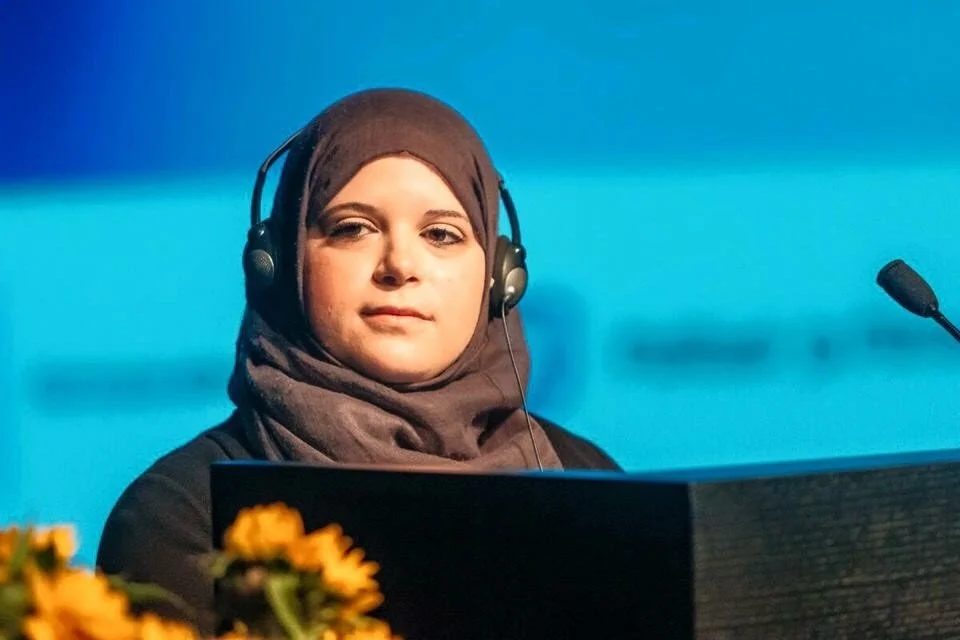
Amna Abdul is a co-founder of Intersectional Feminist Foreign Policy, a group of women’s rights campaigners, journalists, writers, aid workers and policy makers focused on ensuring foreign policy does not create harm to women and looking to develop solutions to the urgent global issues that impact women around the world.
What do peace and security mean to you?
When I think about peace and security, I am always looking at it through an intersectional gendered lens with the aim to understand what women’s experiences and roles are within it. The impact of conflict on women and girls’ experiences varies from those experienced by men and boys, and perhaps this is more clearly laid out when we consider the endemic issue of violence perpetrated against women and girls – examples include Bosnia as well as the Democratic Republic of Congo, and the experiences of refugee women fleeing conflict from Syria. The violence perpetrated against women and girls should be seen as part of the conflict itself, and in terms of long-term impact on communities and societies.
But violence against women and girls also happens during processes and times of peace which women are often excluded from, or they are included as a tokenistic gesture and hold very limited power to influence or create change. I believe in the four pillars of the Women, Peace and Security agenda – participation, protection, prevention, and relief and recovery – and in working within these pillars in a way that truly reflects women’s experiences and the values they hold close, such as faith.
Why are the voices of diaspora women valuable to policy-making on peace and security?
The diaspora communities which exist do not sit in a vacuum away from their home countries. Many have often been forced to flee their home countries and make a new life elsewhere, not necessarily out of choice. We often also make the assumption that second or third-generation communities don’t necessarily have the same links with their respective countries of origin. However, they are engaged immensely in what happens in those countries and are often directly impacted by what happens there.
Diaspora women also have a very different outlook on what is happening in their countries of origin, because they sit in an interesting position. They get a lot of information and keep themselves informed about issues in their home countries, as well as being able to relate to women’s experiences there because they understand the cultural and religious background they are situated in. However, they are at enough of a distance to be able to be an observer, seeing things in a different light than those living it every day. This position is what gives strength to the role that diaspora women can play in policy-making on peace and security.
What projects related to women, peace, and security are you working on or involved with?
Through the work of Intersectional Feminist Foreign Policy, my and co-founder, Shaista Aziz have focused on a range of closed roundtable discussions with diaspora women from Afghanistan, Pakistan, and Libya, and have plans for more. These have included discussions on identity, challenges they face as diaspora women, barriers to participation, and understanding of issues in each community. Although themes overlapped, the way they impacted women in those communities differed greatly.
The work of Intersectional Feminist Foreign Policy also brings together women from all over the world, as well as those living in diaspora communities, through an online network sharing information, news, observations, and experiences.
These are a combination of women who are activists, aid workers, journalists, students, and more, who are seeking safe spaces to belong and share ideas based on an intersectional understanding of women’s varied and intersecting experiences. I’m also involved in a Manchester-specific programme tackling the issues around radicalisation called RadEqual, as well as a European-wide network to share good practice, build new knowledge and understandings, and connect with others. Within these networks, the strength in the voices of diaspora women is vital.
Follow the work of Intersectional Feminist Foreign Policy on Twitter: @IFFPUK